10 Ton Hydraulic Shop Press: Adjustable Table, H-Frame
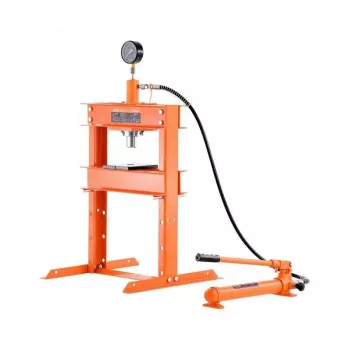
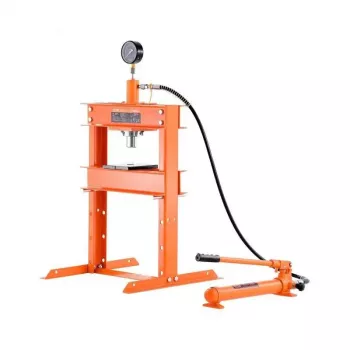
10 Ton Hydraulic Shop Press with Adjustable Worktable & H-Frame Base
A 10 ton hydraulic shop press is a practical centerpiece for pressing, bending, and straightening tasks in a garage or small workshop. With an adjustable worktable and an H-frame base, this style of press is designed to handle common automotive and fabrication jobs while staying stable under load and adaptable to different part sizes. When you need controlled, repeatable force—without swinging a hammer or reaching for heat—this capacity class is often the “just right” option for everyday service work.
What This Shop Press Is Built To Do
This press is made for the kinds of jobs that come up in routine repair and light fabrication:
- Supports common press jobs such as bearing and bushing installation/removal, U-joint service, pulley and gear work, and straightening small brackets or shafts.
- 10 ton capacity suits many home-garage and light commercial tasks where controlled force is needed without heat or hammering.
- Hydraulic operation enables steady, incremental pressure for better control on delicate fits compared with impact methods.
- Adjustable worktable height helps position parts closer to the ram for better leverage and safer setups.
- H-frame base increases stability and helps keep the press square during higher-load operations.
For many interference-fit components, the difference between a clean press job and a damaged part is alignment plus smooth force. A hydraulic ram helps you “feel” what’s happening—so you can stop and correct before a casting cracks or a shaft starts to bend.
Key Features That Matter in Daily Use
Adjustable worktable for real-world part sizes
Press work rarely happens at one height. An adjustable worktable lets you set the working height for tall assemblies (like knuckles or small housings) or short work (like bearings and bushings) so you’re not stacking unstable spacers. A shorter, sturdier setup generally means better control and fewer surprises when the fit breaks free.
H-frame base for stability and alignment
The wide footprint of an H-frame base helps reduce rocking and tipping risk, especially when you’re pressing off-center shapes that require creative support. Staying square under load also helps protect the ram, press plates, and the worktable itself.
Smoother hydraulic ram action
Gradual pressure application can lower the chance of cracking cast parts or distorting thin components. This is particularly useful when seating bearings, pushing out stubborn bushings, or straightening slightly bent brackets where you want incremental movement instead of sudden impact.
Open working area and practical capacity
An open working area makes it easier to reposition V-blocks, press plates, and adapters. And with a practical 10 ton rating, you get enough force for many typical shop jobs without the extra size, weight, and floor-space demand of larger presses.
Specifications at a Glance
Use these reference details to confirm fit for available shop space, expected workloads, and common part sizes.
| Item | Details |
|---|---|
| Product | 10 Ton Hydraulic Shop Press with Adjustable Worktable & H-Frame Base |
| Capacity | 10 ton (20,000 lb class) |
| Worktable | Adjustable height |
| Frame style | H-frame base |
| Price | 420.01 USD |
| Availability | In stock |
Common Jobs and Setup Tips
Bearings and bushings
Use press sleeves or correctly sized drivers so force is applied only where it should be—typically the outer race when installing into a housing, and the inner race when installing onto a shaft. When in doubt, slow down and confirm the press line stays centered as the part moves.
- Use proper press sleeves or appropriately sized sockets to apply force only to the correct race or bushing shell.
U-joints
Support the yoke evenly and press straight. Uneven support can twist the joint, gall the bores, and make the new joint fit poorly even if it “goes in.”
- Support the yoke evenly; press straight to avoid twisting and galling the bores.
Pulleys and gears
Straightening small parts
Safety and Load Control
Pressing work stores energy in the setup. When something shifts—or suddenly releases—it can happen fast. Start with the basics: wear eye protection and keep hands out of pinch points. NIOSH’s guidance on preventing eye injuries is a solid reference for workshop safety fundamentals (NIOSH – Eye Safety and Prevention of Eye Injuries).
For broader guarding and safe operation concepts, OSHA’s machine guarding overview is also worth reviewing (OSHA – Machine Guarding (General Requirements)).
Maintenance and Longevity Basics
When a 10 Ton Press Is the Right Size
In-Stock Picks for Your Workshop
- 10 Ton Hydraulic Shop Press with Adjustable Worktable & H-Frame Base (In stock)
- Heavy-Duty Articulating Overhead Camera Mount (In stock) — handy for documenting press setups, recording teardowns, or sharing step-by-step shop notes.
- Timberland Men’s Leather Boots (In stock) — sturdy footwear can be a practical add-on when working around heavy parts and shop equipment.
- Dr. Martens Women’s Black Boots (In stock) — another durable option for the garage and daily wear.
FAQ
What can a 10 ton hydraulic shop press be used for?
It’s commonly used for installing/removing bearings and bushings, servicing U-joints, pressing pulleys and gears, and straightening small brackets or shafts. The key benefit is controlled, steady pressure—especially when paired with the correct sleeves, drivers, and supports.
How do you set the adjustable worktable height safely?
Set the table so the work sits as close to the ram as practical without creating a tall, unstable stack of spacers. Lock the table supports/pins fully, keep plates level, and do a quick stability check (light preload) before applying higher force.
What safety gear and accessories are recommended for pressing work?
Wear eye protection and keep hands clear of pinch points; use press plates, V-blocks, and proper bearing/seal drivers to maintain alignment. Avoid improvised spacers made from unknown hardware, and apply force slowly so you can stop if anything shifts.








Leave a comment